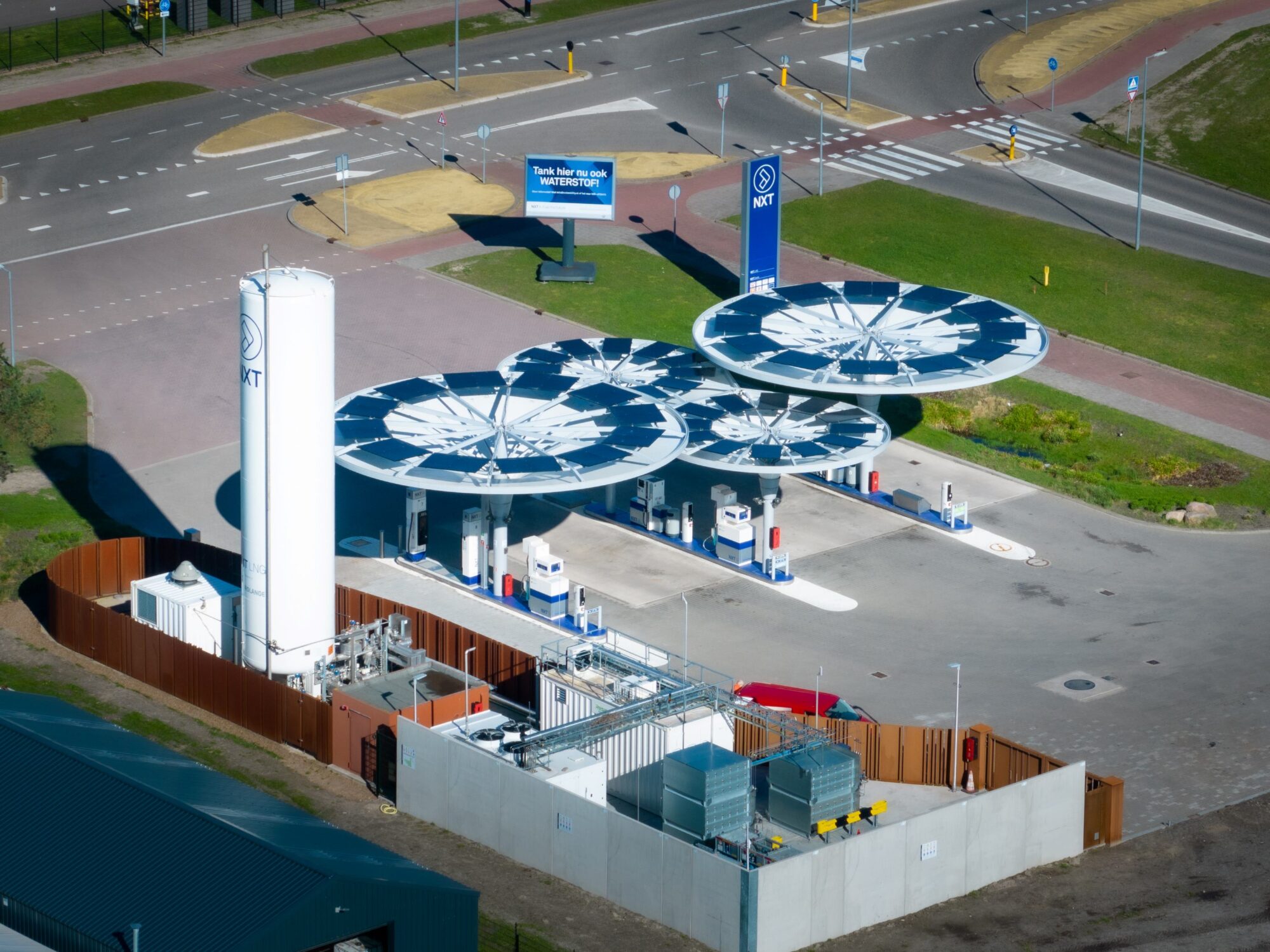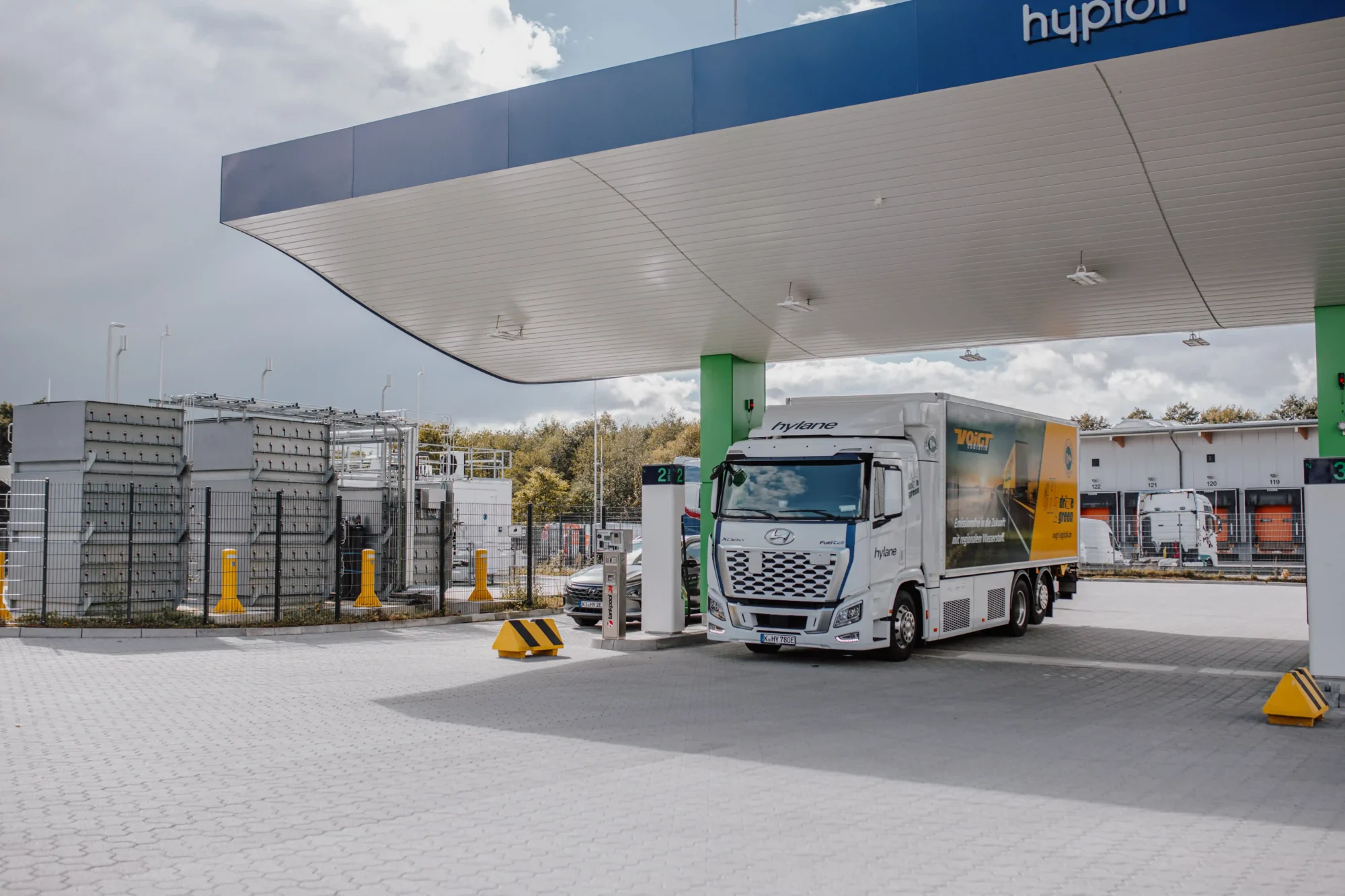
A Future-proof station for hydrogen vehicles.
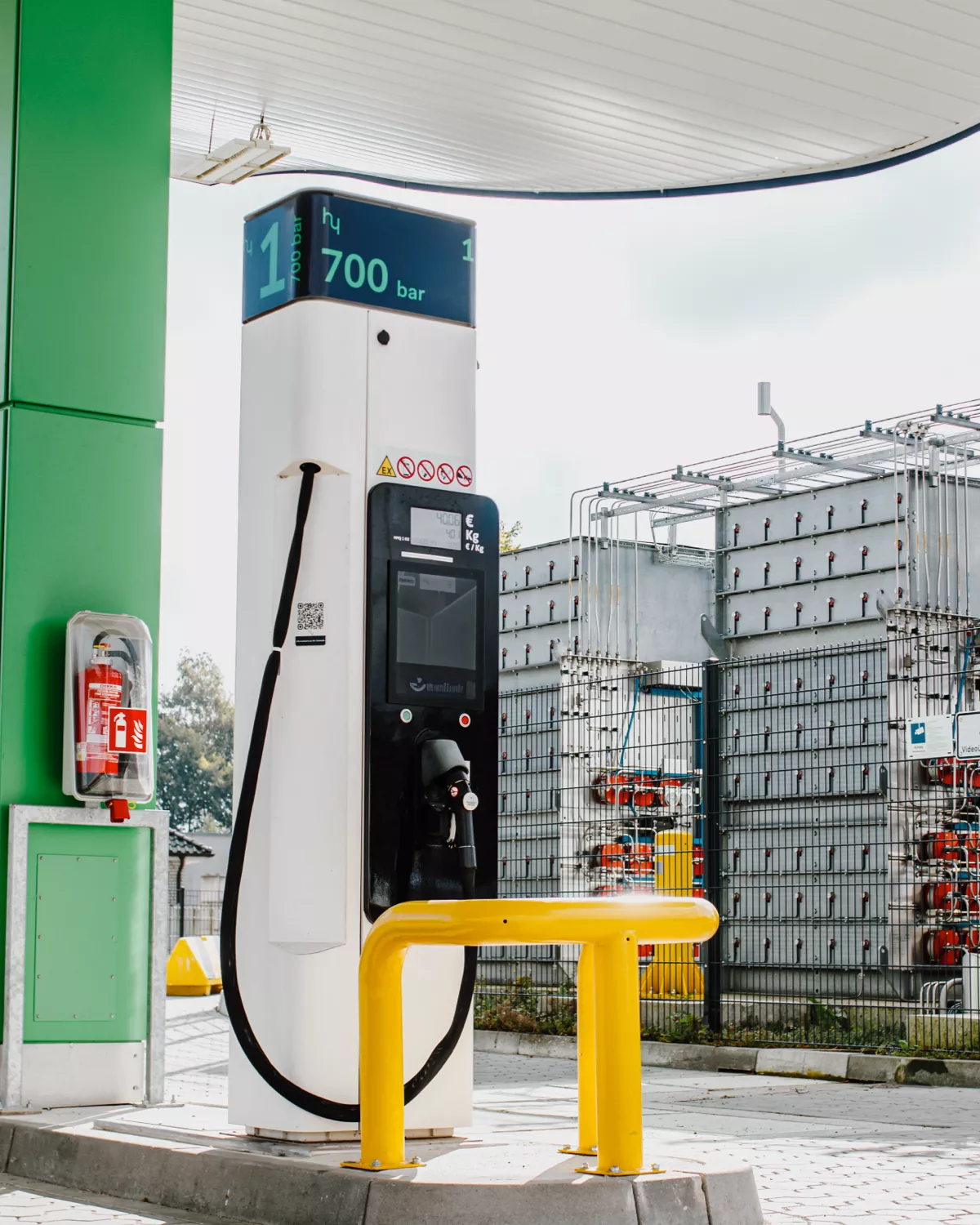
The Full Sized Station (FSS) is designed to support the growing need for publicly accessible hydrogen refueling stations. This solution is ideal for both light and heavy duty vehicles (LDV and HDV), with continuous refueling capacity and high reliability. Through a combination of modular design, energy efficiency, and compliance with international standards, the FSS provides a future-proof infrastructure for the hydrogen market.
The operational capacity ensures continuous refueling without interruption, while the modular design allows easy adjustment of hydrogen supply. In addition, the user-friendly interface provides easy management and operation of the refueling station.
Case examples:
- Ideal for hydrogen infrastructure expansion
- Efficient refueling for large fleets
- Supports refueling for trucks, buses and cars
Comparison Electric and Hydrogen Buses
| Battery Electric Buses | Fuel Cell Electric Buses | |
|---|---|---|
| Zero emission | Yes | Yes |
| Range | Up to 350 km | Up to 550 km |
| Bus schedule flexibility | Limited | High |
| Charging / Refueling time | 4-6 hours (overnight charging) | 6-12 min. after a shift |
| Stability of the range | Decreases in hot/ cold weather or hilly areas | Remains stable |
| Weight | Higher weight due to battery pack | Ligher weight due to fuel cell technology |
| Area of usage | Suitable for flat landscapes | Suitable for hilly/mountain landscapes |
| Temperature | Range affected by hot or cold temperatures | Range not affected by temperature |
| Depot infrastructure adaptations | High | Low |
| Solutions | Charging stations | Hydrogen refueling station |
| Footprint | High | Low |
| Parking layout | Increased parking complexity | Similar to current parking layout |
| Depot logistics | Complex - requires smart charging strategies | Easier - refueling similar to current logistics |
| Current fuel costs | Low (electricity) | High (hydrogen) |
| Bus purchase cost | Lower CAPEX | Higher CAPEX |
| Energy availability | Net congestion - requires major grid expansion | Hydrogen production increasing |
| Technology | Proven technology | Proven technology |
| Battery Electric Buses | Fuel Cell Electric Buses | |
|---|---|---|
| Zero Emission | Yes | Yes |
| Range | Up to 350 km | Up to 550 km |
| Schedule Flexibility | Limited | High |
| Charging/Refuel Time | 4-6 hrs. (overnight) | 6-12 min (after shift) |
| Range Stability | Decreases (weather/hills) | Remains stable |
| Weight | Higher weight (battery) | Ligher weight (fuel cell) |
| Usage Area | Flat landscapes | Hilly/mountain landscapes |
| Temperature | Range affected | Range not affected |
| Depot Infra. Adapt. | High | Low |
| Solutions | Charging stations | Hydrogen refueling station |
| Footprint | High | Low |
| Parking Layout | Increased complexity | Similar to current |
| Depot Logistics | Complex (smart charging) | Easier (similar to current) |
| Current Fuel Costs | Low (electricity) | High (hydrogen) |
| Bus Purchase Cost | Lower CAPEX | Higher CAPEX |
| Energy Availability | Net congestion (grid exp.) | Hydrogen production inc. |
| Technology | Proven | Proven |
Key Benefits of the Full Sized Station
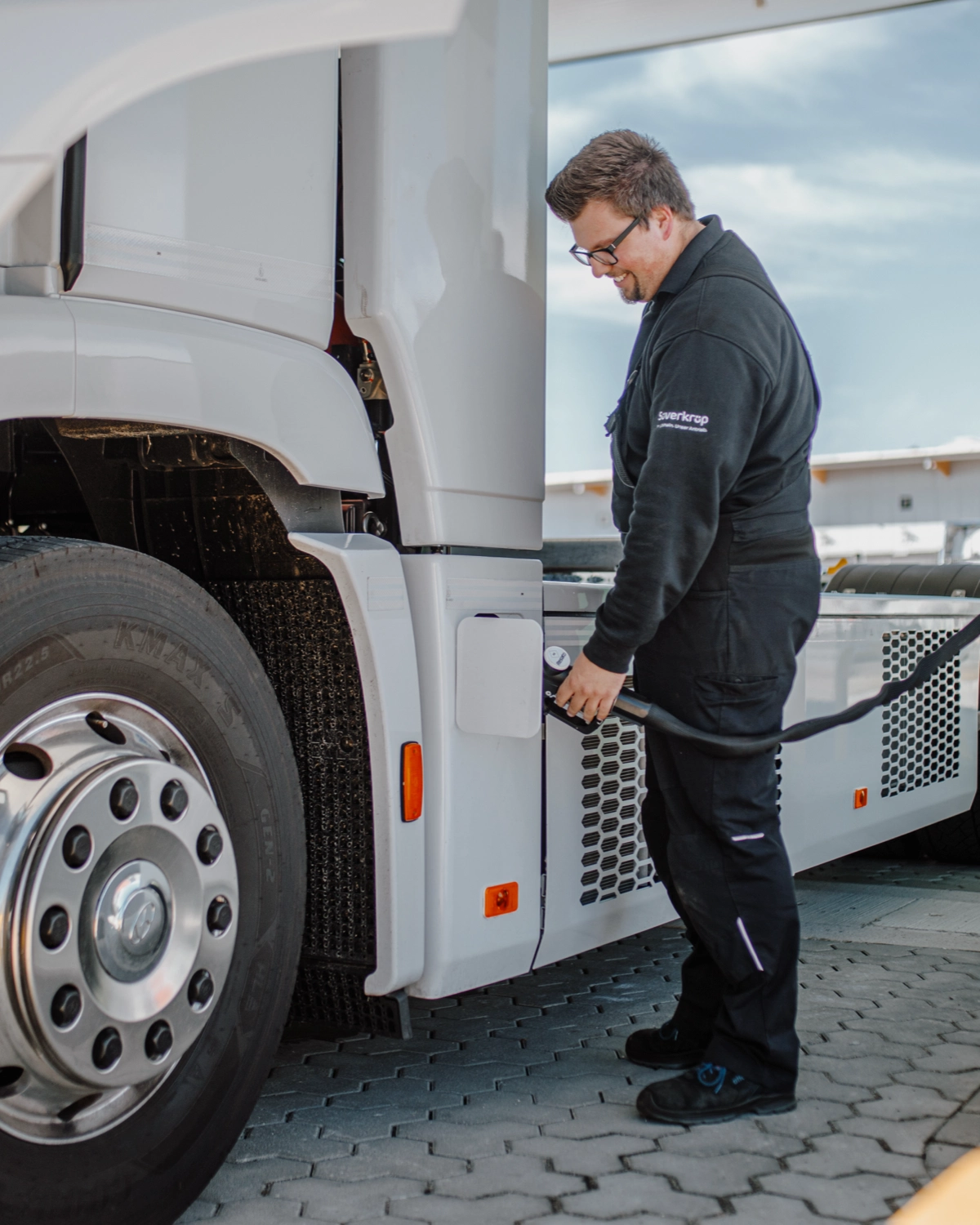

Ability for back-to-back refueling for both cars and trucks up to 2000 kg of hydrogen per day.

High efficiency with durable cooling systems (GWP <3).

Ready for the hydrogen market with scalable, modular technology that is easily adaptable to increasing demand.

Supports various hydrogen sources, from gas cylinders to electrolyzers.

Uptime >95%. Conforms to SAE J2601/5 and AFIR.

Help in obtaining grants for green hydrogen technologies.
Discover everything about the Full Sized Station in the brochure
Visit us
Main office Duitslandlaan 1, 9403 DLAssen, Nederland